The real cause of delay
The single most common reason a registration stalls is sequencing. Facilities order equipment, schedule installation, and only then begin assembling documentation. By the time the file reaches FANR, the room may lack verified shielding, the Radiation Protection Program may be incomplete, or acceptance testing may not yet be done. FANR does not start its review clock until the room is genuinely ready, which means a premature submission does not save time, it simply produces a deficiency report and a 30-day scramble to fix it.
A registration file is a chain of dependent documents. Equipment classification determines which technical specifications apply. Those specifications shape the shielding design. The shielding design feeds the Safety Assessment. The Safety Assessment depends on a designated Radiation Protection Officer being in place. Acceptance testing confirms the equipment performs as specified. Miss one link, and the chain breaks at inspection.
What a complete file actually contains
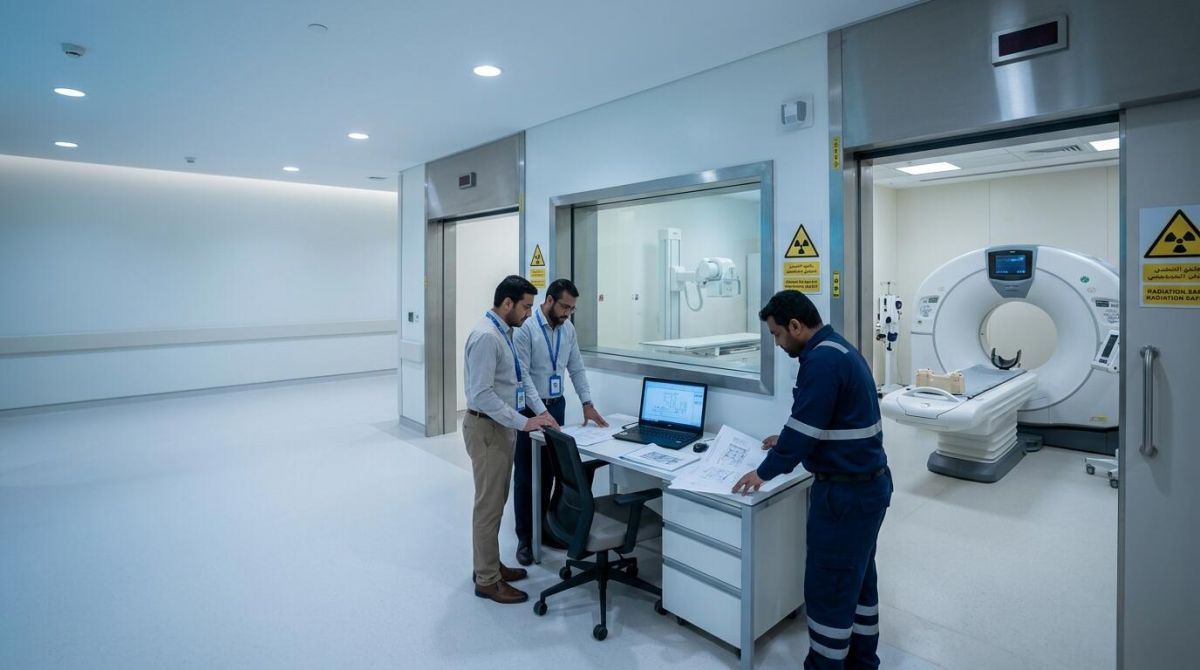
A FANR Practice License application requires a Radiation Protection Program documenting dose constraints, a Safety Assessment, an emergency plan, and quality assurance and quality control procedures for each piece of imaging equipment. It requires a facility layout with shielding specific to the room and the modality. It requires a licensed Radiation Protection Officer, a role FANR recognizes only through approved training. For procurement teams, the practical lesson is direct, commission the shielding design and the Radiation Protection Program before the equipment is delivered, not after.
This is also where the difference between modalities matters. A CT scanner needs both a product-level marketing authorization to be legally sold and a separate FANR Practice License for the facility to operate it. Treating these as one step is a frequent and expensive mistake. MRI and standard ultrasound, by contrast, sit outside FANR scope entirely, governed instead under facility engineering standards.
Compliance does not end at approval
Once a license is granted, it is valid for three years, but the obligations continue. Facilities must run routine quality control tests on all imaging equipment, retain the results for inspection, and be prepared for unannounced spot checks at private clinics. Any equipment modification, replacement, or facility expansion can require updated approval. A registration that was clean on day one drifts out of compliance quickly without active inventory and record management.
This is consistent with how leading UAE health regulators such as the Department of Health and the Dubai Health Authority approach facility oversight, continuous evidence rather than a one-time gate. Operators who build compliance into their operating rhythm avoid the renewal-season panic that catches less prepared facilities.
A measurable difference Facilities
that prepare correctly see the difference in numbers. Fewer deficiency reports. Faster movement from application to operational authorization. No equipment sitting idle while a resubmission works through the queue. For an oncology center or imaging facility where a single scanner represents both significant capital and significant revenue, every week of delay carries a real cost.
The fix is not more paperwork. It is correct sequencing, complete documentation, and a registration file built before the regulatory clock starts. That is the difference between equipment that clears FANR the first time and equipment that waits. For facilities planning new radiation services, aligning registration with healthcare facility setup, regulatory licensing, and healthcare engineering from the outset is what keeps openings on schedule.
If your facility is procuring radiation equipment, the right time to plan registration is now, before delivery, not after.
SUMMARY
Most UAE radiation equipment registrations stall from poor sequencing, not paperwork. Learn why FANR files fail and how correct preparation clears approval faster.