The UAE regulatory reality
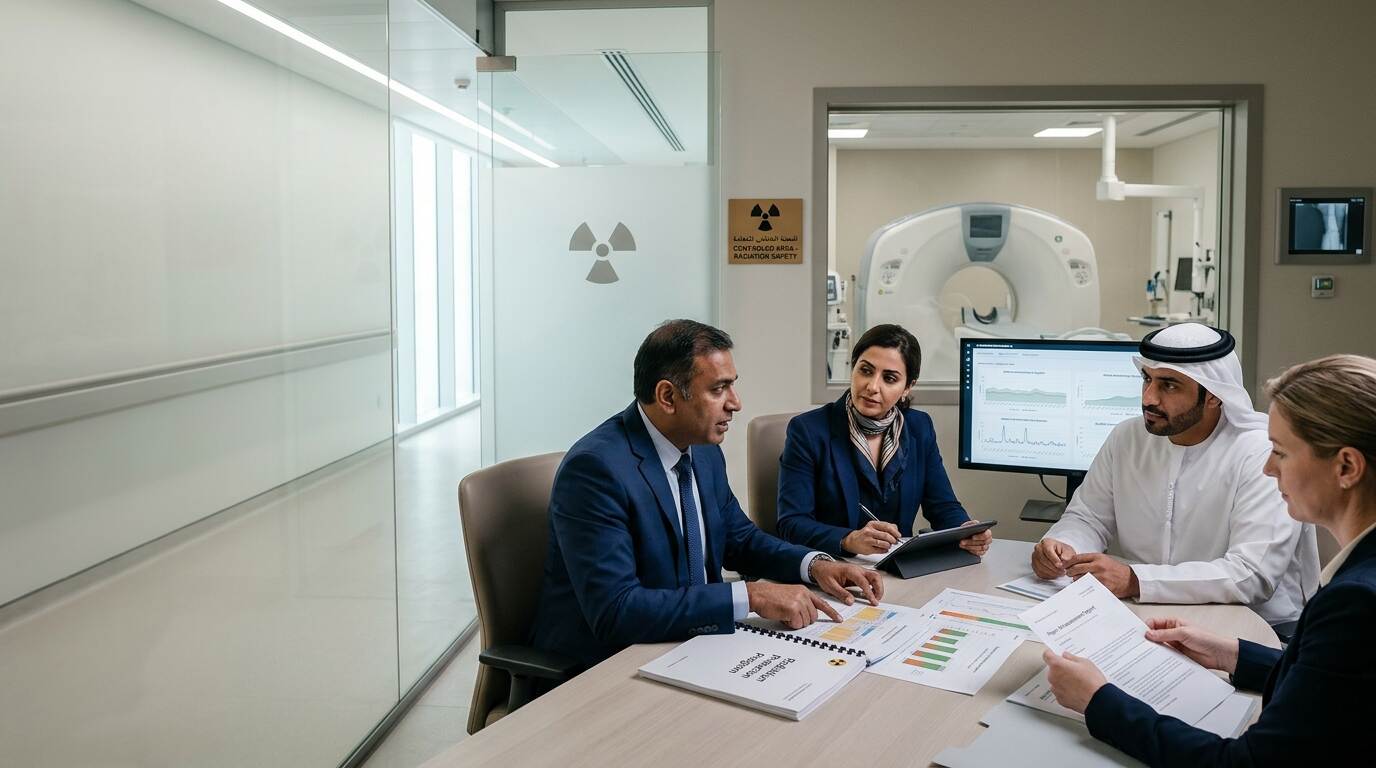
In the UAE, radiation safety is governed by the Federal Authority for Nuclear Regulation. FANR requires facilities to operate under a Radiation Protection Program built around ALARA principles and dose constraints, supported by a safety assessment, an emergency plan, and quality assurance procedures for each piece of imaging equipment. Facilities must also designate a licensed Radiation Protection Officer and maintain training records for everyone who works with or near radiation-producing equipment.
Health authorities add a second layer. Diagnostic imaging standards published by the Department of Health and the Dubai Health Authority require facilities to align with FANR regulations on shielding, room design, and worker protection. A facility therefore answers to both a nuclear regulator and a health regulator at the same time. A fragmented or generic safety document rarely satisfies either.
Where facilities get caught out
Most compliance failures are not dramatic. They are quiet gaps that surface during inspection. Outdated policies that no longer match current equipment. Dosimetry data that is collected but never reviewed. A controlled area with unclear boundaries. An emergency procedure no one has rehearsed. FANR conducts unannounced spot checks at private clinics, which means readiness cannot be a once-a-year exercise. The facilities that struggle are usually the ones treating radiation safety as documentation rather than operation.
What a strong program actually delivers
A well-built radiation protection program produces outcomes you can measure. Occupational exposure stays within FANR dose limits, with monitoring data that proves it. Patient dose is optimized through justification and protocol controls, strengthening both clinical quality and accreditation standing. Controlled areas are clearly defined, access is managed, and incidents are contained before they escalate. When the inspector arrives, the documentation already tells a consistent, defensible story.
There is a commercial dimension too. A failed FANR review delays your practice license, and a delayed license delays revenue. For a new diagnostic center or an expanding hospital department, getting radiation protection right the first time is the difference between opening on schedule and absorbing weeks of avoidable cost.
Building it right
A credible program is always facility-specific. It maps every radiation source, models shielding for the actual room, defines responsibilities from the Radiation Protection Officer down to each operator, and connects training, monitoring, and continuous compliance into one system. This is where specialist support pays for itself. Alpha Health Group has spent more than two decades developing radiation safety frameworks and guiding healthcare facilities through regulatory approval across the UAE and GCC, work that pairs naturally with broader healthcare licensing and regulatory compliance support and with facility planning and engineering readiness.
The takeaway is simple. Radiation protection is no longer a box to tick. It is a continuous operating standard that protects your people, your patients, and your license. Build it properly, keep it current, and inspection stops being something to fear.
SUMMARY
A practical guide to why UAE healthcare facilities need a FANR-compliant, ALARA-based radiation protection program, and how strong design protects staff, patients, and your operating license.