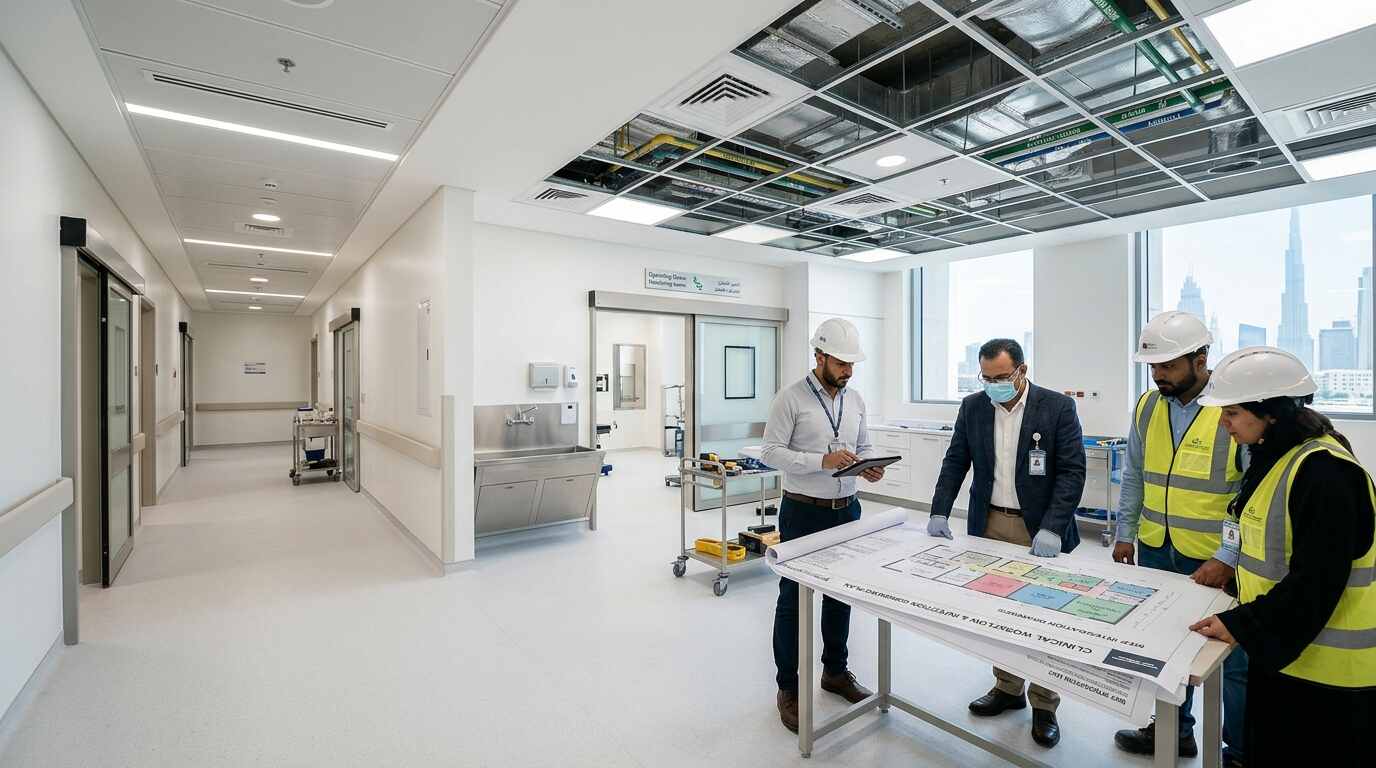
The regulatory layer is the real scope
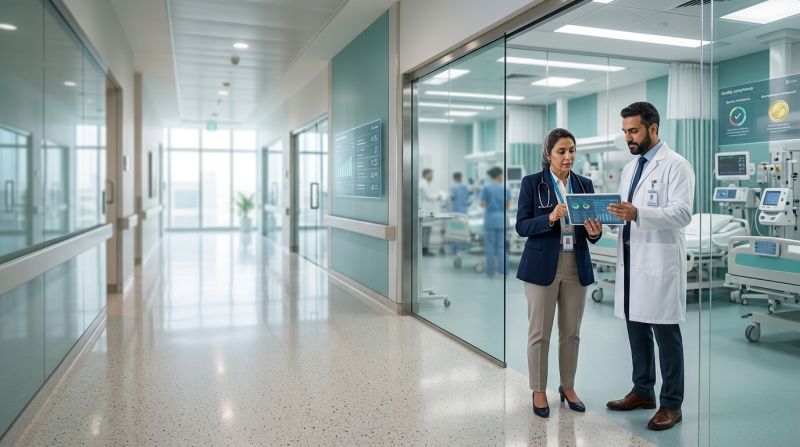
Healthcare facilities in the UAE answer to DHA in Dubai, DOH in Abu Dhabi, and MOH across the northern emirates. Each sets binding requirements for layout, infection control, ventilation, and engineering before a licence is issued. According to globally recognised healthcare facility standards, the physical environment is treated as a clinical safety control, not a cosmetic choice. Surfaces, airflow, and zoning directly affect infection risk, which is why the World Health Organization links facility design to patient safety outcomes.
A fit-out that ignores this layer will look finished and still fail. The walls may be straight and the finishes attractive, but if clean and dirty zones are not separated, or if a treatment room lacks the right clearances, the facility cannot license. That is why design must start from regulation and workflow, not from aesthetics.
Where projects go wrong
Three failure points repeat across the region.
First, retrofitted services. Medical gas, specialised ventilation, and clinical electrical loads are far cheaper to install during construction than to chase afterwards. When MEP is added late, walls reopen and timelines stretch.
Second, equipment planned too late. Imaging, surgical, and dental equipment carry strict requirements for power, drainage, structural load, and clearance. When equipment is selected after the room is built, the room often loses.
Third, finishes that fail audit. Standard joinery and flooring trap bacteria and break down under medical cleaning regimes. Healthcare environments need seamless, antimicrobial, wipe-clean surfaces that hold up to accreditation review.
What good delivery looks like
A compliant fit-out sequences the project around clinical reality. Workflow is mapped first, then rooms are sized to equipment and patient flow. Infection control zoning is designed before partitions are set. Medical MEP is integrated into the build, not bolted on. Operating theatres and laboratories, which carry the strictest standards, are developed with controlled airflow, sterile zoning, and protected services from the outset.
This integrated approach is where specialist delivery pays for itself. When licensing, engineering, and equipment planning sit with one partner, approvals move faster and surprises shrink. Facilities that align construction with regulatory readiness consistently open sooner and avoid the costly rework cycle.
The investor takeaway
In UAE healthcare, time to licence is time to revenue. Every week lost to rework is a week of carried cost without income. The way to protect that timeline is to treat fit-out as the compliance and engineering exercise it actually is, and to build with a partner who plans inspection on day one.
Alpha Health Group delivers this for healthcare clients across the UAE and GCC, joining healthcare consulting, regulatory approvals, and construction into a single accountable delivery. The space is the easy part. Making it pass, on time, is the work.
SUMMARY
A UAE medical fit-out fails or opens on time based on compliance, not finishes. Learn the three failure points that delay licensing and how integrated delivery protects revenue.